
- Monday- Saturday 8am to 8pm
- support@vehicleinspecter.com
Every motorcycle carries a unique Vehicle Identification Number (VIN) — a code that tells the story of the bike’s origin, model year, engine type, and production details. Whether you’re buying a used bike, sorting out insurance, or keeping maintenance records, knowing where to find this number and how to check it can save you a lot of trouble. Here’s everything you need to know.
A VIN is a standardized 17-character code that uniquely identifies a motor vehicle. It’s been used industry-wide since 1981, and it encodes information about the manufacturer, model year, production plant, and a built-in check digit. Insurers, registration authorities, parts suppliers, and law enforcement all rely on it — making it one of the most important pieces of information on any bike.
Most manufacturers stamp or plate the VIN near the steering head — the point where the front forks connect to the frame. That said, exact placement varies by brand.
| Brand | VIN Location |
|---|---|
| Honda | Right side of the steering neck or frame near the front fork |
| Harley-Davidson | Right side of the frame, close to the steering head |
| Yamaha | Steering head, typically stamped on the right side |
| Kawasaki | Left side of the steering head, or under the seat on some models |
| Suzuki | Steering head or on a metal plate near the frame |
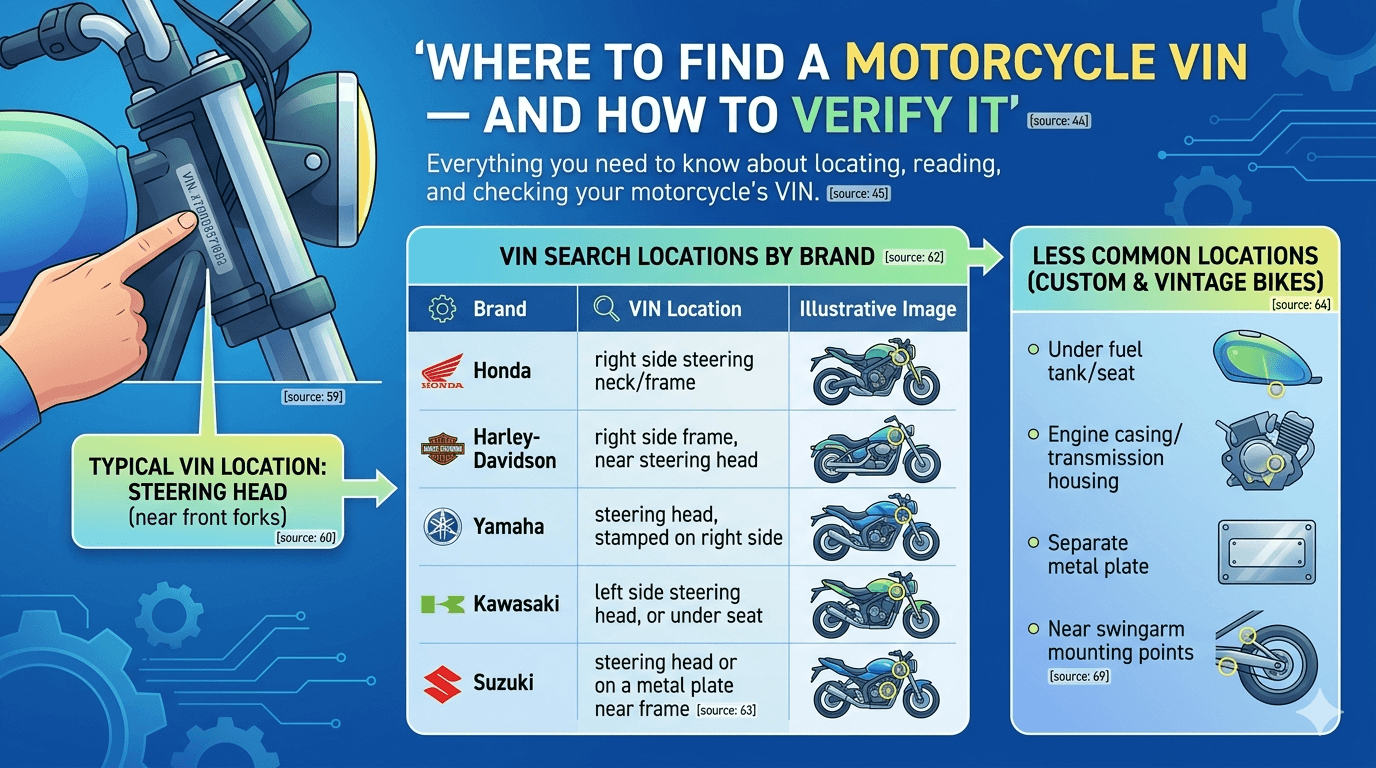
Older or custom motorcycles don’t always follow the standard. If you can’t find the VIN at the steering head, check these spots:
A VIN check gives you a clear window into a motorcycle’s past — accident history, ownership changes, recorded mileage, and theft reports. Without one, you’re essentially taking the seller’s word for everything, which is a risk not worth taking.
| Check Type | What You Get |
|---|---|
| Basic VIN Decoder | Manufacturer details, model year, engine size, factory codes |
| Standard History Report | Ownership changes, title status, accident records, reported damage |
| Comprehensive Report | Full history — maintenance notes, mileage verification, theft records, past sale listings |
A comprehensive report is especially valuable when buying privately, as it can reveal hidden issues and give you real leverage when negotiating the price.
Your VIN isn’t just for buying and selling — it’s also a key tool in theft prevention and recovery.
Finding and verifying a motorcycle’s VIN is one of the simplest things you can do to protect yourself — whether you’re buying, selling, or just staying on top of your ownership records. A proper VIN check brings clarity on a bike’s true history and helps you steer clear of fraud, hidden damage, and costly regrets.

Gain instant access to comprehensive local and international vehicle histories with just a single click. Don’t let hidden surprises—such as previous accidents, odometer rollbacks, salvage titles, or outstanding loans—compromise your investment in a used car. Whether you’re buying from a neighboring city or importing a vehicle from overseas, a complete history report gives you the confidence and transparency you need to make a smart, informed purchase. Protect your hard-earned money by knowing exactly what you’re getting before you sign on the dotted line.