The Hidden Cost of Odometer Fraud
Why Budget Cars Carry the Greatest Risk
Shopping for a used car is rarely straightforward — and one of the most overlooked dangers is mileage tampering. While premium vehicles tend to come with thorough documentation and verified histories, lower-priced cars are far more vulnerable to odometer fraud. New research from VIN Verified confirms that while clocking affects vehicles across all price brackets, the risk is substantially higher at the budget end of the market.
Why Budget Cars Carry the Greatest Risk
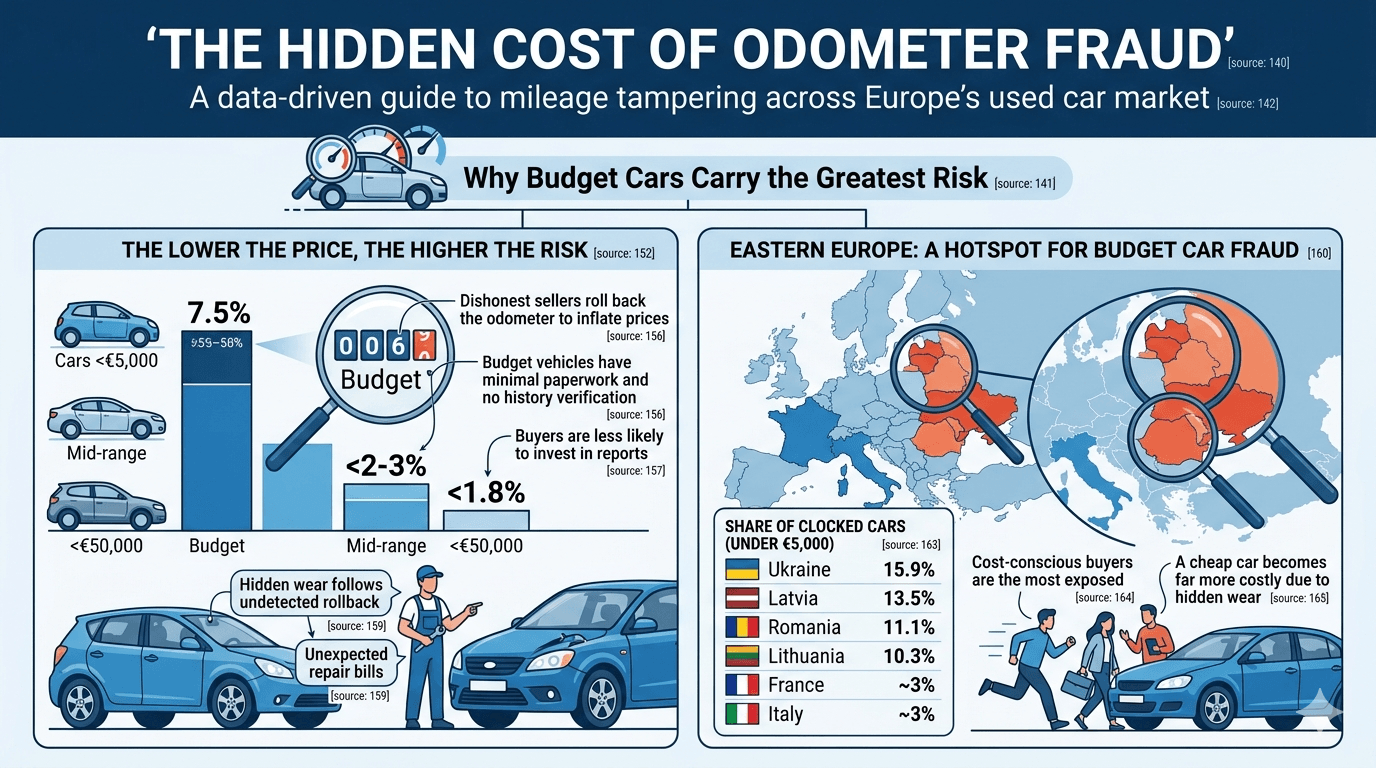
- 7.5% of cars priced below €5,000 show signs of odometer manipulation
- Ukraine recorded the highest rate of clocked vehicles in the sub-€5,000 bracket at 15.9%
- Odometer rollback is most prevalent among low-priced vehicles in Eastern Europe
- Just 1.8% of cars valued above €50,000 had tampered mileage readings
- Spain led the fraud rate among luxury vehicles, with 4.1% of premium cars affected
The Lower the Price, the Higher the Risk
VIN Verified data consistently shows that odometer fraud decreases as vehicle price increases. Cars below €5,000 carry the highest manipulation rate at 7.5%, while those above €25,000 drop to around 2-3%. Vehicles priced over €50,000 are the least targeted, with only 1.8% showing any mileage discrepancy.
The reason is straightforward: budget vehicles are frequently sold with minimal paperwork and no independent history verification, giving dishonest sellers a much easier opportunity to roll back the odometer and inflate the asking price. To make matters worse, cost-conscious buyers are less likely to invest in a vehicle history report — a decision that can prove far more expensive down the line.
As one automotive expert at VIN Verified notes, buyers often seek out low mileage without verifying whether that figure is genuine. Hidden mechanical wear that follows an undetected rollback can result in a string of unexpected repair bills arriving shortly after purchase.
Eastern Europe: A Hotspot for Budget Car Fraud
Mileage tampering is a global problem, but it is particularly concentrated in Eastern European used car markets. A combination of economic pressures, high demand for affordable older vehicles, and weaker documentation requirements creates conditions where fraud is both easier to carry out and harder to detect.
| Country | Share of Clocked Cars (Under €5,000) |
|---|---|
| Ukraine | 15.9% |
| Latvia | 13.5% |
| Romania | 11.1% |
| Lithuania | 10.3% |
| France | ~3% |
| Italy | ~3% |
Buyers in these markets are often the most price-sensitive — which, ironically, makes them the most exposed. A car purchased cheaply with a falsified odometer can quickly become far more costly once hidden wear begins to surface.
Luxury Cars: Less Common, but Losses Are Far Greater
Although odometer fraud is significantly less frequent among high-value vehicles, the financial consequences when it does occur are considerably more severe. Even a 2-3% fraud rate across premium cars translates into enormous losses for affected buyers.
Purchasing a €50,000 vehicle with a rolled-back odometer could mean overpaying by as much as €10,000 — before factoring in the added maintenance costs that come with concealed mechanical wear. Within the premium segment, Spain and Portugal lead in fraud rates.
| Country | Fraud Rate (Cars Above €50,000) |
|---|---|
| Spain | 5.8% |
| Portugal | 4.9% |
| European Average | ~1.8% |
Warning Signs Every Buyer Should Know
Odometer fraud can be difficult to detect without a history report, but certain red flags are worth watching for:
- A suspiciously low price: A price that seems too good to be true — sellers often underprice fraudulent vehicles to encourage a fast decision before the buyer investigates further
- Excessive interior wear: Heavy wear on the steering wheel, pedals, gear knob, or seat bolsters that does not match the stated mileage
- Pressure to decide quickly: Urgency from the seller is a classic tactic used to prevent a VIN check from being run
- Incomplete or inconsistent service records: Gaps in maintenance history are one of the strongest indicators of potential tampering
None of these signs confirm fraud on their own, but any combination should prompt a more thorough investigation before money changes hands.
Cross-Border Vehicle Trading in Europe: An Added Layer of Risk
One factor that makes odometer fraud particularly difficult to combat in Europe is the volume of vehicles that move across national borders. The EU’s open internal market makes it straightforward to purchase a vehicle in one country and register it in another — a process that can effectively reset or obscure a car’s documented history.
Vehicles from Eastern European markets frequently make their way west, often with incomplete or altered paperwork. A car registered in Germany, for example, may have spent years operating in Romania or Bulgaria, where its mileage was clocked before being exported. Without a cross-border history check, buyers in Western Europe have no way of knowing.
The European Commission has acknowledged this issue and introduced measures through the Vehicle Type Approval Regulation (EU) 2018/858, which includes provisions aimed at improving access to vehicle data. However, enforcement remains inconsistent across member states, and private buyers often remain unprotected. This is precisely why an independent VIN check — drawing on records from multiple European countries — remains one of the most effective tools a buyer has.
How to Verify a Car's True Mileage
Every VIN Verified vehicle history report includes a dedicated Odometer Section that tracks all recorded mileage entries and presents them in a clear visual timeline. Any sudden drop or unexplained gap in the data is an immediate red flag — one that gives buyers solid grounds either to walk away or to negotiate a significantly lower price.
Running a VIN check takes minutes and costs a fraction of what a single undisclosed repair bill might. It is, without question, one of the most straightforward precautions any used car buyer can take.
Bottom Line
Odometer fraud is one of the most widespread and costly scams in the European used car market. Whether you’re hunting for an affordable runabout or a premium saloon, verifying a vehicle’s history before you buy is non-negotiable. A VIN check through VIN Verified gives you access to recorded mileage data across multiple countries and databases — so you know exactly what you’re paying for, and exactly what you’re getting.
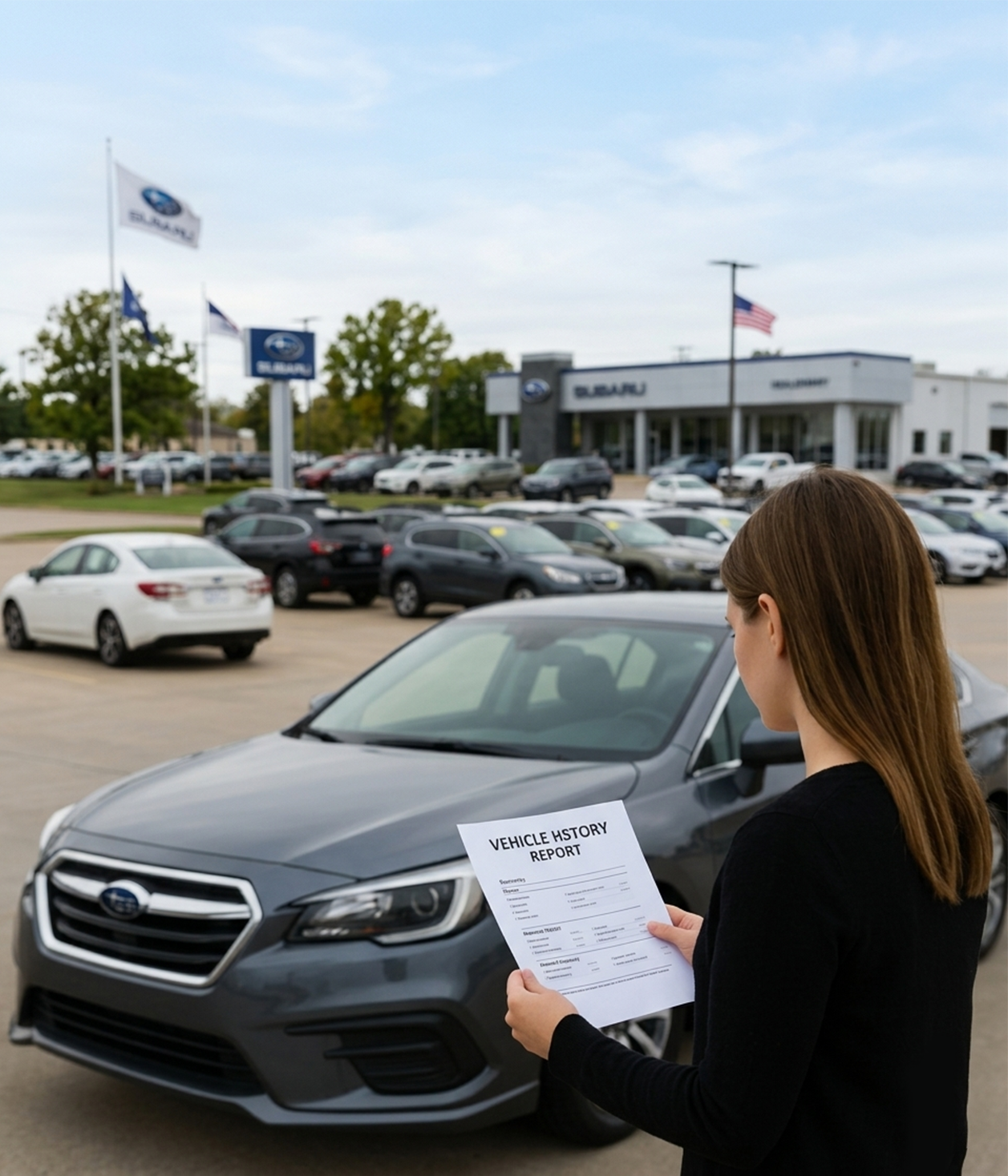
Get Your Vehicle History Report
Starting from €39.99
Gain instant access to comprehensive local and international vehicle histories with just a single click. Don’t let hidden surprises—such as previous accidents, odometer rollbacks, salvage titles, or outstanding loans—compromise your investment in a used car. Whether you’re buying from a neighboring city or importing a vehicle from overseas, a complete history report gives you the confidence and transparency you need to make a smart, informed purchase. Protect your hard-earned money by knowing exactly what you’re getting before you sign on the dotted line.